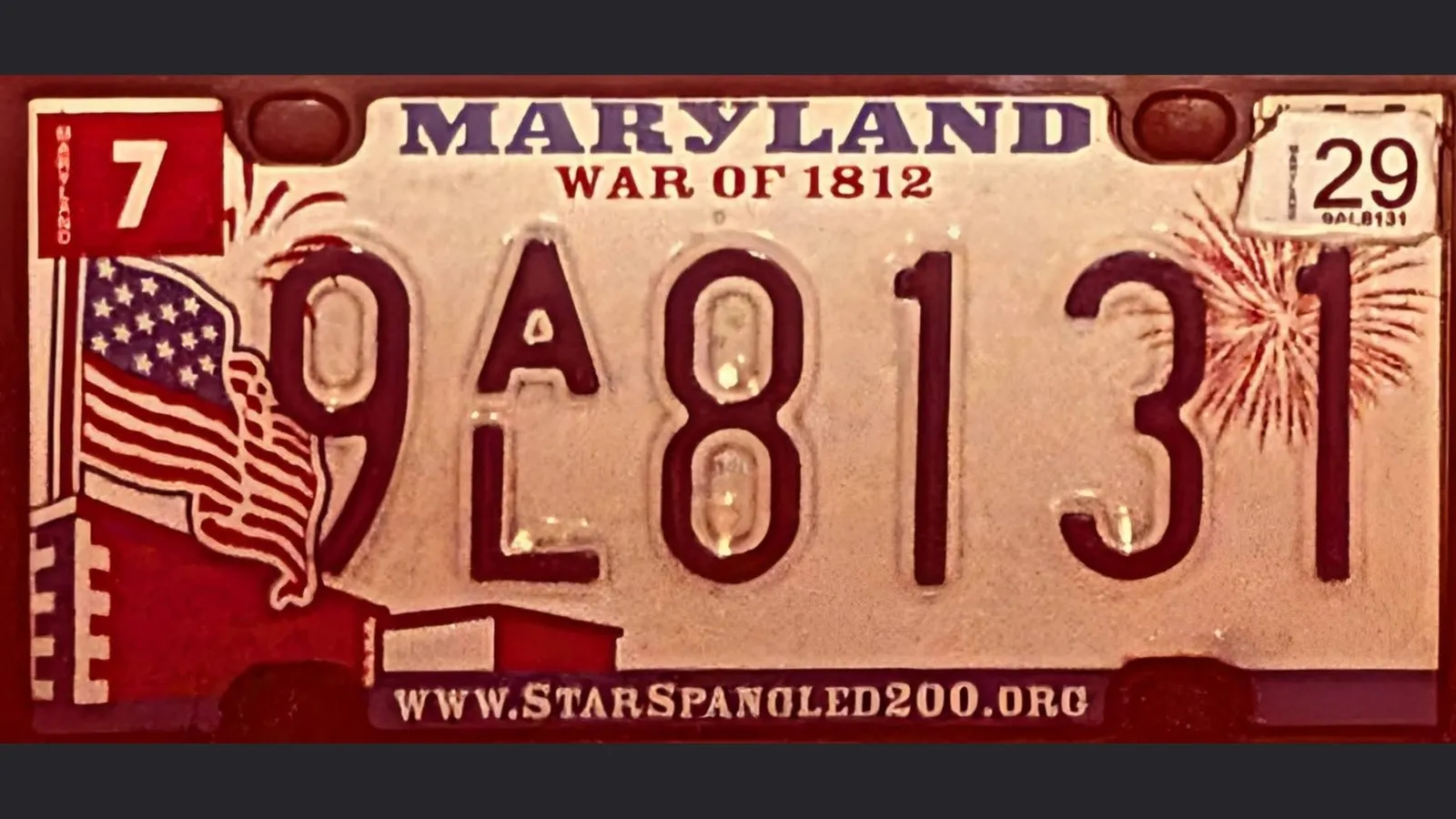
A Maryland War of 1812 commemorative license plate. Photo: AnonymousEditor95 / Wikimedia Commons, CC BY 4.0
Baltimore residents who are still driving on another state’s plates are running out of time. The first warning letters under Maryland’s tougher registration law went out Oct. 1, and 60 days later, starting around the end of this month, owners who haven’t registered or proved an exemption start owing $7 a day.
The fines run for up to 60 days, a maximum of $420 per vehicle, according to the Motor Vehicle Administration’s Nov. 18 notice. The clock is tied to each owner’s own letter, so a driver who got a warning in late October has until late December before fines begin.
For Baltimore drivers, the practical question is whether a letter has arrived and what date is on it, because that date starts each owner’s 60-day clock. The rules matter most for people who have lived here for a while and never switched over.
What the law changed
Maryland has long required new residents to register their vehicles within 60 days of moving in. What changed this year is enforcement. Senate Bill 111, signed by Gov. Wes Moore as Chapter 487 and in effect since Oct. 1, lets the MVA send a formal warning when it has reasonable cause to believe a Maryland resident’s vehicle is registered elsewhere.
After the warning, the owner has 60 days to register in Maryland or show the MVA that the vehicle doesn’t need to be. If the vehicle still isn’t properly registered after 120 days, the MVA notifies the local jurisdiction. The law then allows the county State’s Attorney, in Baltimore the city State’s Attorney, to bring a civil action against the vehicle itself and seek booting, towing or impoundment.
The bill also lets the MVA take an out-of-state plate from a long-term resident who has ignored two or more traffic citations, including tickets from automated speed and red-light cameras, or whose Maryland driving privilege is suspended.
Who is exempt
The MVA lists a few exceptions to the residency rule: active-duty military members, their spouses and dependents, and full-time students. Those drivers can get a nonresident permit, which costs $27. Active-duty service members get the permit free.
Anyone who received a letter but believes it doesn’t apply should respond with proof during the 60-day window. The MVA’s Plate Where You Live page explains the exemption process.
A tax break that ends Dec. 31
There is a financial reason to move before the end of the year. Marylanders who once registered a vehicle here, later registered it in another state while still living in Maryland, and now bring it back are exempt from the state’s 6.5% vehicle excise tax, but only if they register by Dec. 31, 2026. On a car valued at $20,000, that tax would be $1,300.
“Proper vehicle registration is an important part of keeping Maryland’s roads safe for everyone,” Motor Vehicle Administrator Chrissy Nizer said in the MVA’s release, adding that the enforcement ensures compliance with the state’s insurance and safety inspection rules.
How many drivers it has reached
The MVA said more than 4,300 cases have been resolved since Oct. 1, and more than 13,800 vehicles have been registered in Maryland in connection with its outreach. Before the warnings began, the agency mailed courtesy letters in January and July to owners it believed might be out of compliance.
For Baltimore households already juggling year-end bills, from water bill credits that need renewing to Medicaid paperwork, the registration deadline is one more date to put on the calendar. Registration can be done online, at an MVA branch or through a licensed tag-and-title service, and a Maryland safety inspection is generally required for a used vehicle coming from another state.
The first fines can begin about Nov. 30 for owners who received letters at the start of October. The excise tax exemption for returning vehicles ends Dec. 31. More household money coverage is on our Finance page.